Trusted Chimney Sweep Closter NJ: 2026 Guide for Hillsdale and Northern Valley Residents
October has a way of catching people off guard in Bergen County. The temperature drops fifteen degrees in a week, everyone reaches for the thermostat, and then someone lights the fireplace for the first time since March. A homeowner on Valley Road in Hillsdale called us last fall in exactly that situation a faint smoky smell drifting back into the living room, her kids upstairs, and a chimney that hadn’t been looked at in at least three years. She’d been meaning to book a chimney sweep in Closter NJ that summer when life was quieter. It never happened. What we found when we arrived was a flue partially blocked by a third-degree creosote deposit and a damaged damper that was sealing poorly. Neither problem was catastrophic yet, but both were headed that way.
We tell that story not to alarm anyone but because it’s representative of what we see across Hillsdale, Closter, Norwood, and Old Tappan every single autumn. The problems we find are almost always fixable. The difference between a straightforward cleaning and a costly repair almost always comes down to timing specifically, whether a homeowner booked service in July or waited until the night of the first freeze.
What Actually Goes Wrong in a Chimney and Why It Matters When You Call
Chimneys fail in predictable ways. Understanding the pattern helps homeowners recognize what they’re dealing with and why the diagnostic process looks the way it does. Here are the problems we encounter most often in this part of Bergen County, along with what causes them and what a proper fix actually involves.
Creosote Buildup, Especially Third-Degree Glazed Deposits
The symptom is usually subtle at first: a faint tar-like smell when the fireplace is running, or visible dark staining around the firebox. By the time a homeowner notices something is wrong, the buildup can already be substantial. According to the Chimney Safety Institute of America, creosote is the leading cause of chimney fires in the United States, with the U.S. Fire Administration estimating roughly 25,000 of those fires occur annually. First-degree creosote the dry, flaky kind sweeps out cleanly. Second-degree is a denser, crunchy layer that requires more aggressive brushwork. Third-degree, the glazed variety, is where things get complicated. It coats the flue liner like lacquer and cannot be removed with standard equipment. We use a chemical treatment applied across multiple visits, combined with mechanical removal, to break it down safely. This process costs significantly more than a routine sweep and takes longer to schedule. Homeowners in Closter and River Vale who book us in late summer almost never have third-degree deposits they’ve caught the buildup before it progressed. Homeowners who call in November sometimes do.
Damaged or Missing Chimney Caps
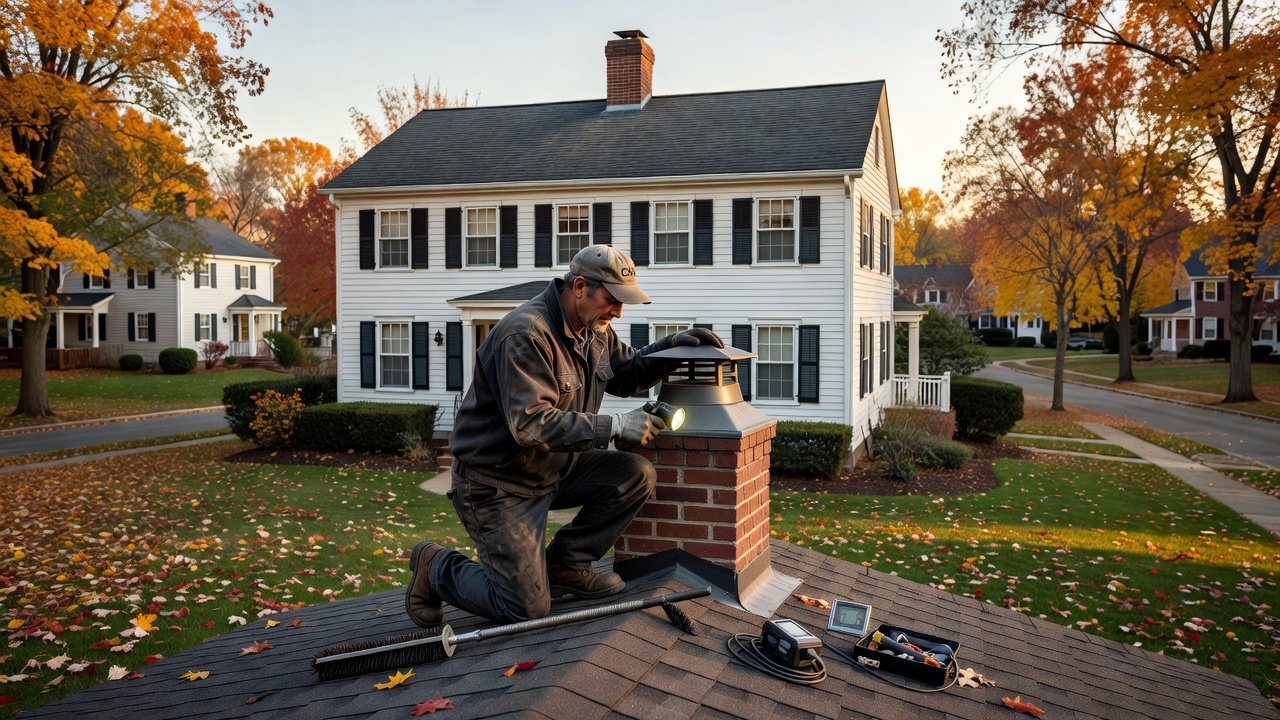
Caps fail for two reasons: weather and wildlife. Bergen County winters involve freeze-thaw cycles that stress metal components, and raccoons in particular are relentless about pulling at caps and screens. The symptom is water in the firebox, white staining (efflorescence) on the brick above the roofline, or birds and debris coming down the flue. The diagnostic step here is straightforward we inspect the cap from the roof and with our camera equipment but the consequences of ignoring a missing cap are not. Water entering the flue degrades mortar joints, accelerates liner cracking, and can rust out the damper plate within a single season. We see this regularly in older homes in Harrington Park and Demarest where the original cap has never been replaced. A new stainless steel cap runs $150 to $300 installed in most cases. The masonry repairs that follow years of uncapped water intrusion can run several times that.
Cracked or Deteriorated Flue Liner
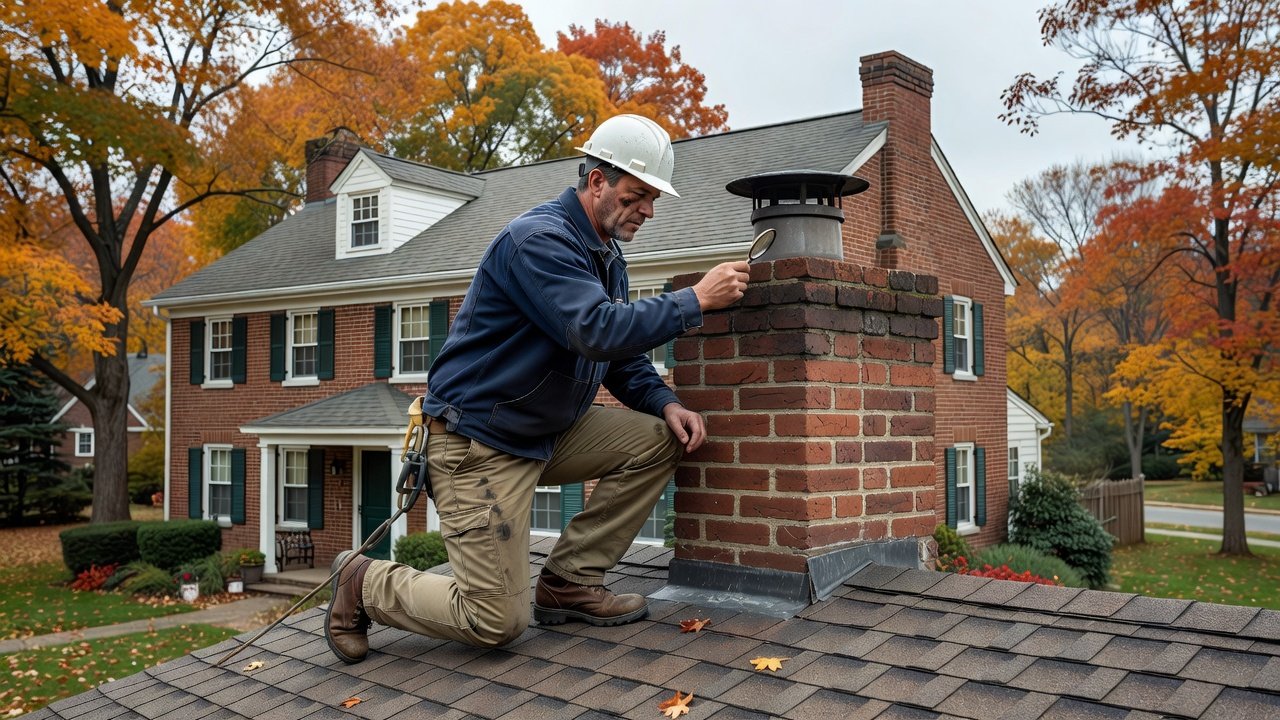
This is the problem homeowners are least likely to detect on their own because the liner sits inside the chimney where no one looks. Symptoms can include excessive smoke backdrafting into the room, an unusual smell even when the fireplace isn’t in use, or in more advanced cases, visible white or gray staining on exterior chimney walls indicating moisture migration. Liner cracks are diagnosed by camera what the industry calls a Level 2 inspection. The CSIA reports that a Level 2 inspection, which includes video scanning of the flue interior, typically costs between $150 and $500 depending on height and complexity, and is required any time a home is sold, or a system has experienced a malfunction. For cracked tile liners, the fix is either a full relining with a stainless-steel liner or a castable cement application for certain configurations. Neither is quick. Scheduling either repair during the October rush means waiting weeks. Scheduling in August or September means we can usually complete the work before anyone needs the fireplace.
Mortar Joint Deterioration and Spalling Brick
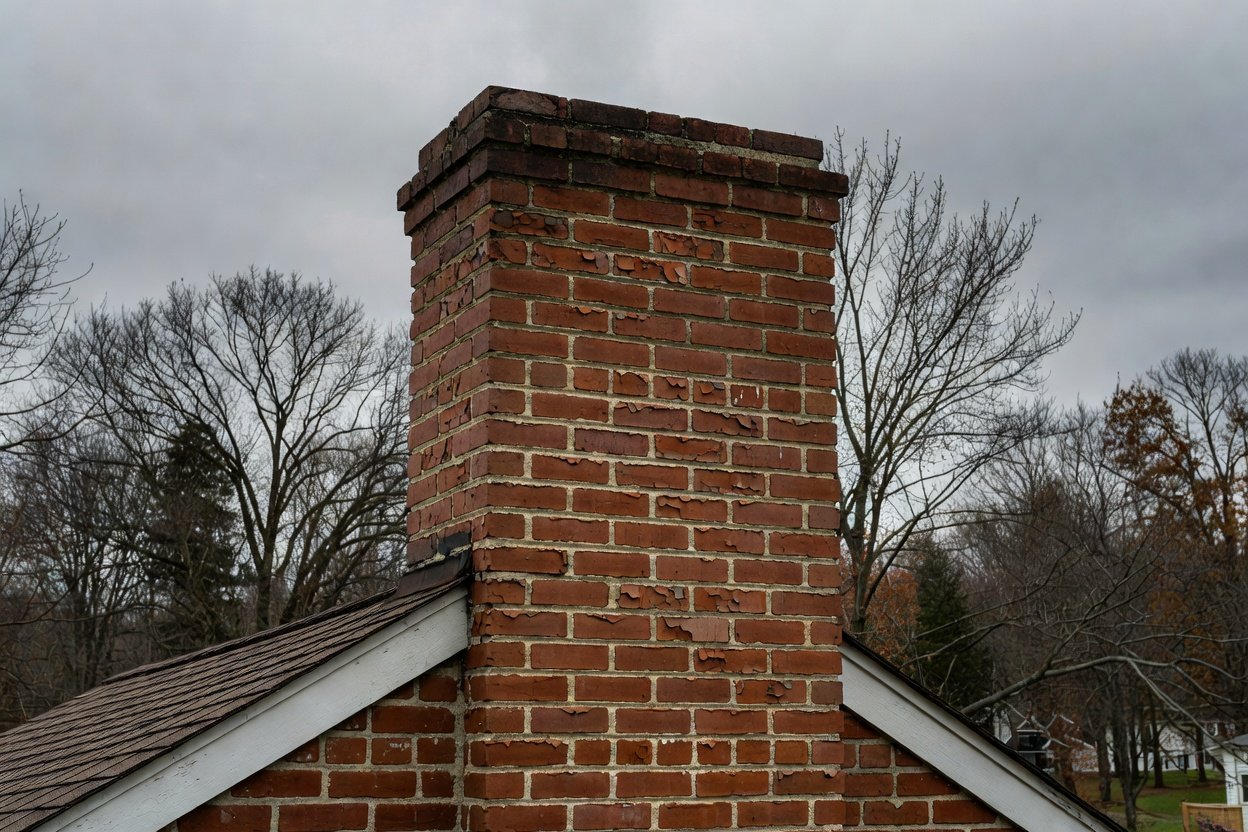
Brick chimneys in the Northern Valley take a beating. The masonry is exposed to full weather sun, freezing rain, ground-level humidity from the Pascack Valley and without a quality water repellent applied every few years, mortar joints erode and brick faces begin to flake. The symptom is visible: small chunks of brick or mortar debris in the firebox or on the roof, white mineral deposits on the exterior brick, or brick faces that look pitted and rough rather than uniform. The cause is water penetration and freeze-thaw expansion. Left alone, the process accelerates. A chimney that has minor tuckpointing needs meaning the mortar between bricks needs to be raked out and repointed is a manageable repair. A chimney where water has been entering unchecked for five years may require partial or full rebuilding of the crown and upper courses. Prevention here is genuinely straightforward: an annual inspection catches early deterioration before it compounds, and a water-repellent application every few years dramatically slows the process.
Damper Problems — Sticking, Warping, and Missing Plates
A damper that doesn’t seal properly lets conditioned air escape up the flue all winter. A damper that sticks open is an energy loss; one that sticks shut is a carbon monoxide hazard if someone lights a fire without noticing. We diagnose damper condition visually during every inspection we look at the plate, the seating frame, and test the mechanism manually. On older chimneys with throat dampers, the cast iron plate often warps after years of thermal cycling. Replacement of a throat damper is a straightforward repair when we’re already doing annual service. Top-mount dampers, which sit at the crown and double as a cap, are another option we install frequently across Hillsdale and Woodcliff Lake. Homeowners who wait until mid-November to call frequently tell us their fire smoked badly from the first use of the season in many of those cases, the damper was the problem all along.
Smoke Backdrafting Not Caused by the Chimney
This one surprises people. A homeowner calls convinced the chimney is blocked, but our sweep and camera inspection come back clean. The real culprit is house pressure modern, tightly insulated homes sometimes create negative pressure conditions where makeup air can’t enter fast enough to support a drafting fireplace. The diagnostic process involves ruling out blockage first, then checking flue height relative to the roofline, and finally discussing combustion air solutions with the homeowner. This isn’t a chimney defect, but it requires a chimney professional to properly diagnose it and distinguish it from an actual flue problem. We’ve run this diagnostic on a handful of newer construction homes in Park Ridge in recent years as builders have tightened up insulation standards.
The Honest Case for Booking Before September
The NFPA recommends that chimneys be inspected at least once a year and cleaned as needed, regardless of use frequency. That standard doesn’t say “when it’s convenient” or “after the first fire.” There’s a practical reason for the timing recommendation beyond safety: availability. Our schedule in October and November fills weeks in advance across the Closter and Hillsdale service area. HomeAdvisor’s 2024–2025 cost data shows chimney sweep pricing in the northeastern United States trends toward the higher end of the $130–$380 national range, and emergency or priority appointments during peak season only push that further. A job we can do thoughtfully in August with time to order parts, schedule a follow-up if liner work is needed, and complete everything before the heating season becomes a rushed, sometimes incomplete process in late October when every available slot is already spoken for. The cost of waiting isn’t always financial. Sometimes it’s a fireplace you can’t use for the first month of winter because the liner repair is backed up.
Frequently Asked Questions
How often do I need a chimney sweep in Closter NJ or the surrounding area?
The National Fire Protection Association recommends annual chimney inspections regardless of how frequently you use the fireplace. For wood-burning systems where you’re burning a cord or more per season, the CSIA also recommends an annual professional cleaning. Gas fireplace chimneys still need annual inspections even if they require less frequent sweeping. In Bergen County, we recommend booking that annual service between June and early September to avoid the fall scheduling backlog.
What does a chimney sweep typically cost in Hillsdale or Closter NJ in 2026?
A standard chimney sweep and Level 1 inspection in the Northern Valley region of Bergen County generally falls in the upper range of the national average, which HomeAdvisor’s most recent data puts at $130 to $380. Most straightforward sweeps with a visual inspection in this area run between $200 and $325. If a Level 2 inspection with camera scanning is needed required when a home is sold or after a malfunction expect $150 to $500 depending on chimney height and accessibility. Any additional repairs are quoted separately after inspection.
Can I wait until fall to schedule my chimney sweep, or does timing really matter?
Timing matters more than most homeowners expect. In Bergen County, chimney service schedules fill weeks in advance starting in late September. If we find a problem during an October inspection a cracked liner, a failed damper, advanced creosote completing the repair before you need the fireplace becomes difficult. Booking in summer means we can inspect, identify any issues, order materials, and complete all work well before the heating season begins. It also means the job gets done without the time pressure that inevitably affects quality.
Schedule Your Closter Chimney Sweep
If you’re in Hillsdale, Closter, Harrington Park, Norwood, or anywhere else in the Northern Valley and you haven’t had your chimney looked at this year, we’d like to hear from you. Northvale Chimney serves this area because we live here, we know these homes, these chimneys, and these conditions. We don’t rush jobs, we don’t upsell work that isn’t needed, and we stand behind everything we do. That’s what done once and done right means to us. Call us or reach out through chimneynorthvale.com to book your inspection before the fall schedule fills up.
Related from Northvale Chimney: Smart Chimney Inspection Norwood NJ · Honest Chimney Sweep Northvale NJ