Reliable Chimney Repair Northvale NJ: 2026 Guide for Emerson and Northern Valley Residents
The U.S. Fire Administration estimates roughly 25,000 chimney fires occur in American homes every year, and a significant share of them trace back to damage that was visible months before the fire started. A homeowner on Kinderkamack Road in Emerson learned this the hard way last winter, when what looked like a few loose bricks near the crown turned out to be the beginning of serious spalling through the upper flue. She had noticed hairline cracks the previous spring and assumed they were cosmetic. By the time she called us, water had worked its way into the mortar joints, frozen and expanded through two cold cycles, and the liner had shifted enough to require a full relining. The repair that might have cost a few hundred dollars in April cost considerably more in January.
We tell that story not to alarm anyone, but because it plays out in some version across Emerson, Westwood, Park Ridge, and Hillsdale every single winter. Chimney repair Northvale NJ is a phrase people search in a panic, usually after they’ve smelled smoke in a room that shouldn’t smell like smoke, or after a home inspector flags something at closing. This guide walks you through how to assess your chimney’s condition honestly, what steps to take before the heating season tightens its grip, and where the real danger lies when repairs get delayed.
Before You Start: Know What You’re Actually Looking At
Chimneys fail in ways that aren’t obvious from the living room. You might see a stain on the ceiling near the firebox, or notice that your damper rattles differently than it used to, or find small chunks of masonry in the firebox after a rainstorm. None of those things tells you on its own how serious the problem is. Before you climb a ladder, call a contractor, or budget a repair, you need to understand the difference between surface deterioration and structural compromise, because the repair approach is completely different.
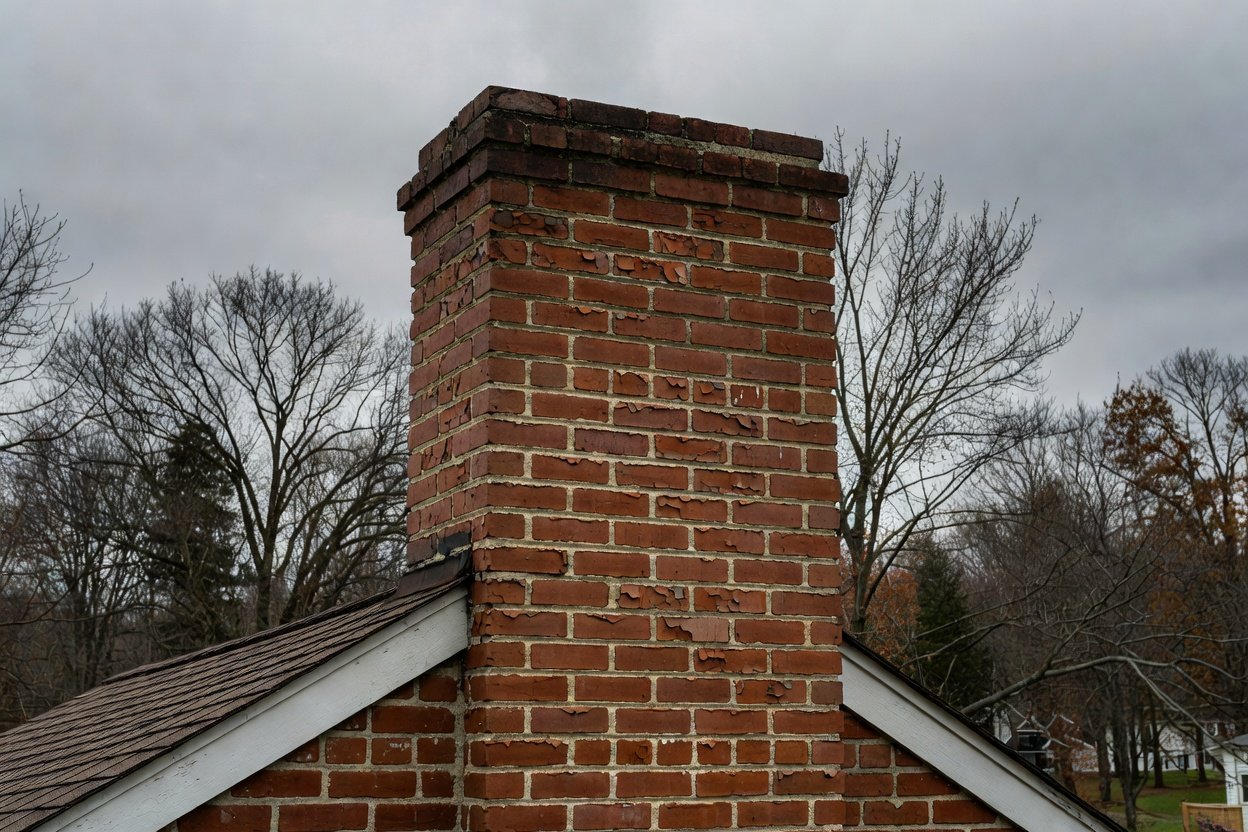
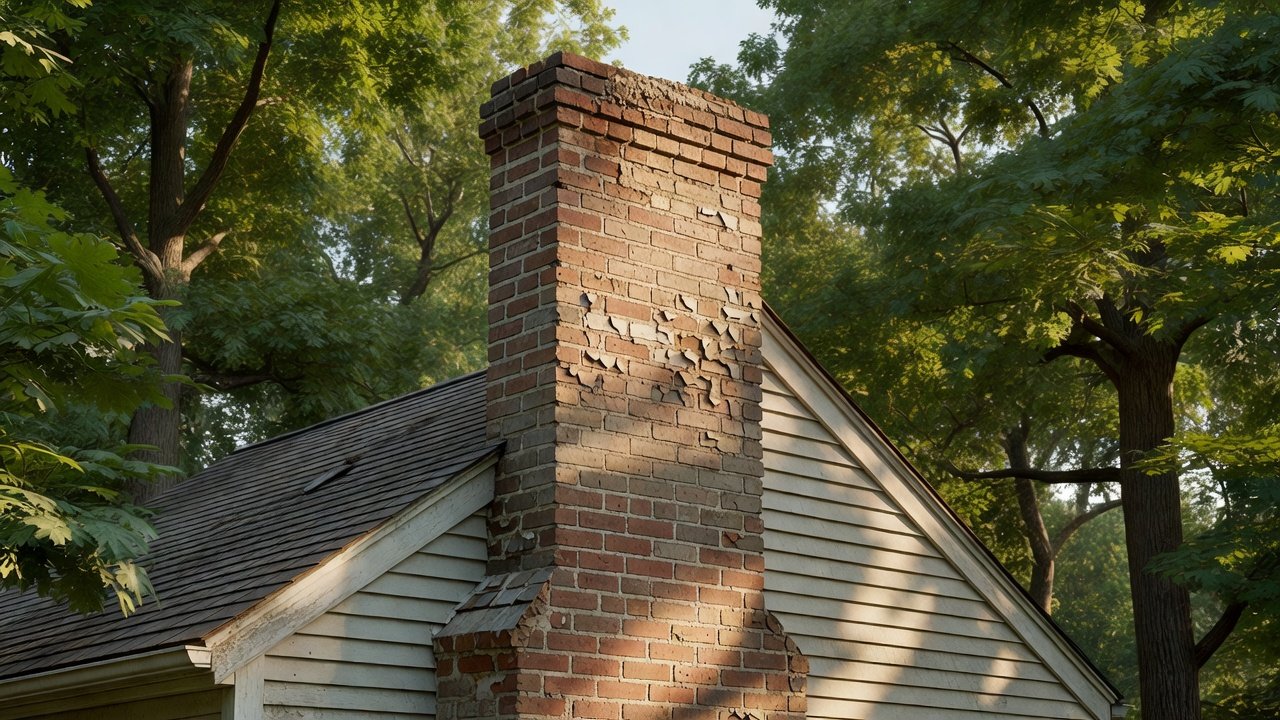
Surface deterioration includes spalling brick faces, mortar joint erosion, and minor efflorescence (the white mineral staining you see on older chimneys). These are real problems that accelerate if ignored, but they are not immediately life-threatening. Structural compromise includes cracked or shifted flue tiles, a failed chimney crown, a damaged flashing junction where the chimney meets the roof, or a liner that has separated. These create pathways for combustion gases, including carbon monoxide, to enter living spaces. That distinction matters before you do anything else.
Step 1: Do a Ground-Level Visual Inspection Before Burning Season
Stand at several points around your house and look at the chimney from the ground with binoculars if you have them. You are looking for horizontal cracks in the brick courses, mortar that has recessed noticeably below the brick face, white staining that wasn’t there last year, and any visible gaps where the chimney meets the roofline. In Emerson’s older housing stock, particularly the colonial and cape-style homes common around Lincoln Boulevard, you will often see brick that has been painted at some point. Paint traps moisture, and trapped moisture accelerates the freeze-thaw damage that New Jersey winters deliver reliably from November through March.
Write down what you see. Take photos from multiple angles. This gives you a baseline to share with a technician and protects you from guessing during a phone conversation about what your chimney actually looks like.
Step 2: Inspect the Firebox and Damper From Inside
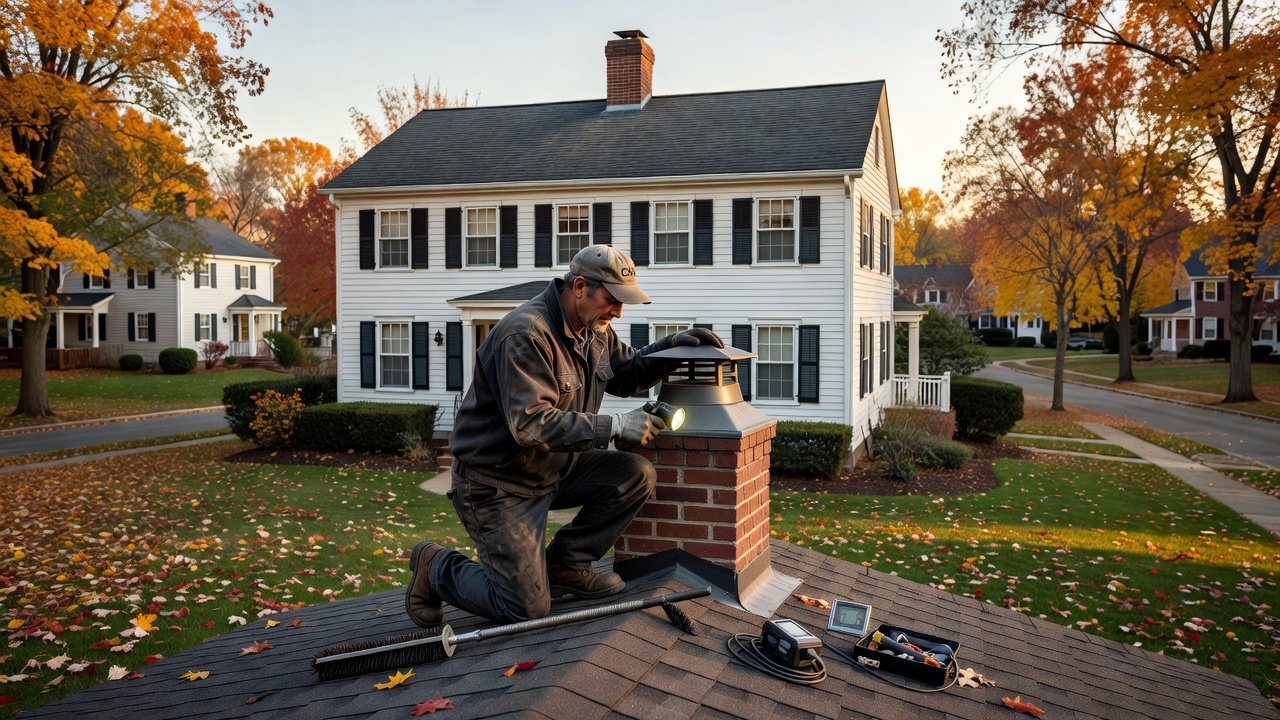
With a flashlight, look up into the firebox before the first fire of the season. Tap the firebox walls gently. They should feel solid. If you hear a hollow sound or see white flaky deposits high in the firebox, the refractory panels may be failing. Check the damper by opening and closing it slowly. It should move without significant resistance and seat fully when closed. A damper that sticks or sits crooked is telling you something about the liner or smoke chamber above it.
Do not use the fireplace if you see visible cracks running through the firebox floor or walls, or if you cannot get the damper to open fully. According to the Chimney Safety Institute of America, creosote buildup is the leading cause of chimney fires, but a compromised firebox is what allows heat and flame to travel where it shouldn’t. Both issues matter.
Step 3: Understand What a Level 2 Inspection Actually Covers
If your ground-level and firebox checks raised any flags, the next step is a professional inspection before any repair work begins. The CSIA reports that a Level 2 inspection, which includes video scanning of the flue interior, typically costs between $150 and $500 depending on chimney height, accessibility, and local market rates. In Bergen County, including jobs we’ve done in Closter, Emerson, and River Vale, we tend to be at the mid-to-upper end of that range because of labor costs in this market, and because older chimneys here often require more time to evaluate properly.
What a Level 2 inspection gives you is documentation. You get a visual record of the flue’s interior condition that a contractor can point to when recommending a liner repair, a relining, or a crown rebuild. Without that documentation, you are guessing about what’s wrong and paying for a repair that may or may not address the actual failure point.
Step 4: Prioritize Repairs by Safety Risk, Not by Cost
Once you have an inspection report, organize the recommended repairs by risk level, not by price. Flue liner damage comes first because a compromised liner is what separates combustion gases from the wood framing of your house. NFPA 211 requires that chimneys be inspected at least once a year precisely because liner deterioration is progressive and often invisible without a camera. Crown repair and flashing repair come next because water intrusion through those points will destroy the masonry from within over one or two seasons. Tuckpointing and cosmetic brick repair are important but can often be scheduled in a second phase without adding meaningful risk if the liner and crown are addressed first.
We have seen homeowners in Norwood and Park Ridge reverse that priority order to save money in the short term, and in most of those cases they ended up paying more total because the water damage continued while they were waiting.
Step 5: Vet the Contractor Before Anyone Gets on Your Roof
This is where homeowners lose money most often. Chimney repair Northvale NJ searches pull up a mix of legitimate masonry contractors, general handymen who do occasional chimney work, and out-of-area companies that run seasonal advertising without local roots. Ask any contractor for their CSIA certification, their New Jersey Home Improvement Contractor registration number, and references from jobs in your specific area. A company that has done work on chimneys in Emerson, Hillsdale, and Woodcliff Lake will understand the specific brick profiles and mortar compositions used in Bergen County construction from the 1940s through the 1990s. That matters when you’re matching mortar for tuckpointing, because the wrong mortar hardness will cause new damage to existing brick.
Get the repair scope in writing before any work begins, and confirm what warranty, if any, covers the repair.
Step 6: Schedule Repairs in Late Summer or Early Fall
Masonry work requires temperatures above 40 degrees Fahrenheit during application and curing, and mortar needs time to cure fully before it faces freeze-thaw stress. August through October is the practical window for chimney repair in Northern New Jersey. By November, you are running against the weather calendar. We regularly turn down masonry repair requests in December and January not because we don’t want the work, but because a repair done in 28-degree weather will fail inside of two years. The heating season in New Jersey runs from October through April, which means your repair window and your need window are almost the same size. Starting in August gives you margin.
Troubleshooting Tip: What to Do If You Smell Smoke in the House During a Fire
Stop burning immediately. Open a window on the same floor to equalize pressure if smoke is pulling back into the room, but do not assume the problem is a downdraft issue without further investigation. Smoke in the living space during a fire is one of the clearest indicators of a blockage, a collapsed liner section, or a serious draft problem caused by structural damage. Do not reuse the fireplace until a technician has inspected it. The NFPA reports that heating equipment is the second leading cause of home fires in the United States, accounting for about 13 percent of reported home fires, and a significant share of those involve chimneys that showed warning signs before the incident.
How do I know if my chimney needs repair before the heating season?
Look for spalling brick, recessed mortar joints, white staining on the exterior, gaps at the roofline flashing, or any smoke smell in the house during a fire. A Level 2 inspection with video camera scanning will confirm whether the issue is cosmetic or structural. Do not burn wood in the fireplace if you have visible firebox cracks or a damper that won’t fully open.
What does chimney repair typically cost in Emerson and Bergen County, NJ in 2026?
Costs vary widely by repair type. A Level 2 inspection runs $150 to $500 in this market. Tuckpointing for a full chimney might run $400 to $900 depending on access and extent. Crown rebuilds and liner relining are more involved and typically start above $1,000. Because labor costs in Bergen County are on the higher end of national averages, budget accordingly and get any estimate in writing with a defined scope before work begins.
Can chimney damage wait until spring, or does it need to be fixed before I use my fireplace?
That depends entirely on where the damage is. Cosmetic surface deterioration is generally not an immediate hazard, though it will worsen through the winter. Flue liner cracks, a failed crown, or damaged flashing are different and should be addressed before you burn anything. A compromised liner can allow carbon monoxide and heat to reach areas of the house structure they were never meant to reach. If you are unsure, have a professional inspect it before your first fire of the season.
Schedule Your Emerson Chimney Repair Assessment
If your chimney showed any of the warning signs described here, or if it has simply never been looked at since you bought your home, reach out to us at Northvale Chimney. We serve Emerson, Northvale, Westwood, Park Ridge, Hillsdale, Closter, and communities throughout the Northern Valley region of Bergen County. We will tell you honestly what we find, what it means, and what your options are. That is what done once and done right means to us, and it is the only way we work. Call us or use the contact form at chimneynorthvale.com to schedule your inspection or repair assessment.
Related from Northvale Chimney: Trusted Chimney Sweep Closter NJ · Chimney Sweep Service in Northvale, NJ · Honest Chimney Repair Norwood NJ