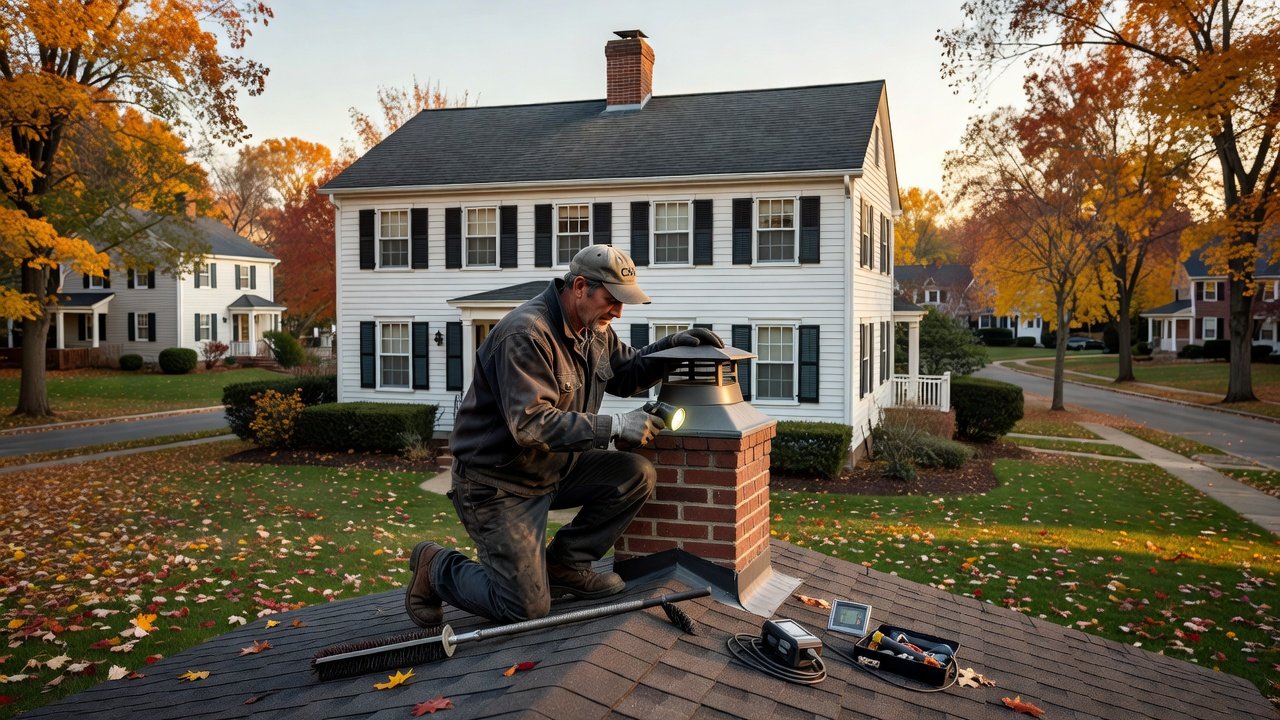
Trusted Chimney Sweep Harrington Park NJ: 2026 Guide for Bergen County Residents
Your chimney will usually tell you when it needs attention the trouble is knowing which signs mean “schedule it soon” and which mean “don’t light another fire until a technician looks at this.” If you’ve noticed anything unusual this heating season, here is a plain-language breakdown of what we see in the field, what it means, and whether you can wait or need to call now.
What We Saw in Westwood Last Fall
A homeowner on Kinderkamack Road in Westwood called us in late October 2025 with a problem she had noticed over the summer: a faint, persistent smoky smell in her living room even though the fireplace had been cold for months. She assumed it was something unrelated maybe the HVAC system. By the time she called, we found a third-degree creosote deposit lining the upper third of her flue and a cracked flue tile she hadn’t known existed. One good fire that fall could have been genuinely dangerous.
We get calls like this every season across Harrington Park, Northvale, Old Tappan, and Park Ridge. The warning signs were there for months. The homeowner just didn’t know what they were pointing at. That’s exactly what this guide is for.
Signs You Need a Chimney Sweep in Harrington Park NJ and What Each One Actually Means
The National Fire Protection Association (NFPA 211) recommends that chimneys, fireplaces, and vents be inspected at least once a year and cleaned as needed, regardless of how frequently the fireplace is used. Most of the homeowners who call us for urgent work had at least one of the following signs and didn’t recognize it as a red flag. We’re going to be specific here, because vague advice doesn’t help anyone.
1. A Smoky or Sour Smell When the Fireplace Is Cold
This is the most underestimated sign we encounter. If your living room smells like a campfire in July, that odor is creosote vapors migrating down through the flue and into your home. It gets worse on humid days and when your air conditioning runs, because negative pressure pulls air and odor down the chimney. This is not a ventilation quirk you learn to live with. It means there is a deposit problem, and possibly a draft problem, that a sweep needs to assess in person.
Call a pro now. This is not a DIY situation. The source of the odor needs to be identified and cleared before you use the fireplace again.
2. Black, Oily Staining Around the Firebox Opening
A light gray ash residue on the firebox surround is normal. Black, tar-like staining that extends onto the facing tile or mantel is not. That coloring is a sign of third-degree creosote the dense, glazed form that neither a hardware store brush nor a chimney cleaning log can remove. According to the Chimney Safety Institute of America (CSIA), creosote buildup is the leading cause of chimney fires in the United States, with the U.S. Fire Administration estimating roughly 25,000 chimney fires occur annually.
Call a pro now. Third-degree creosote requires rotary cleaning or chemical treatment by a certified technician.
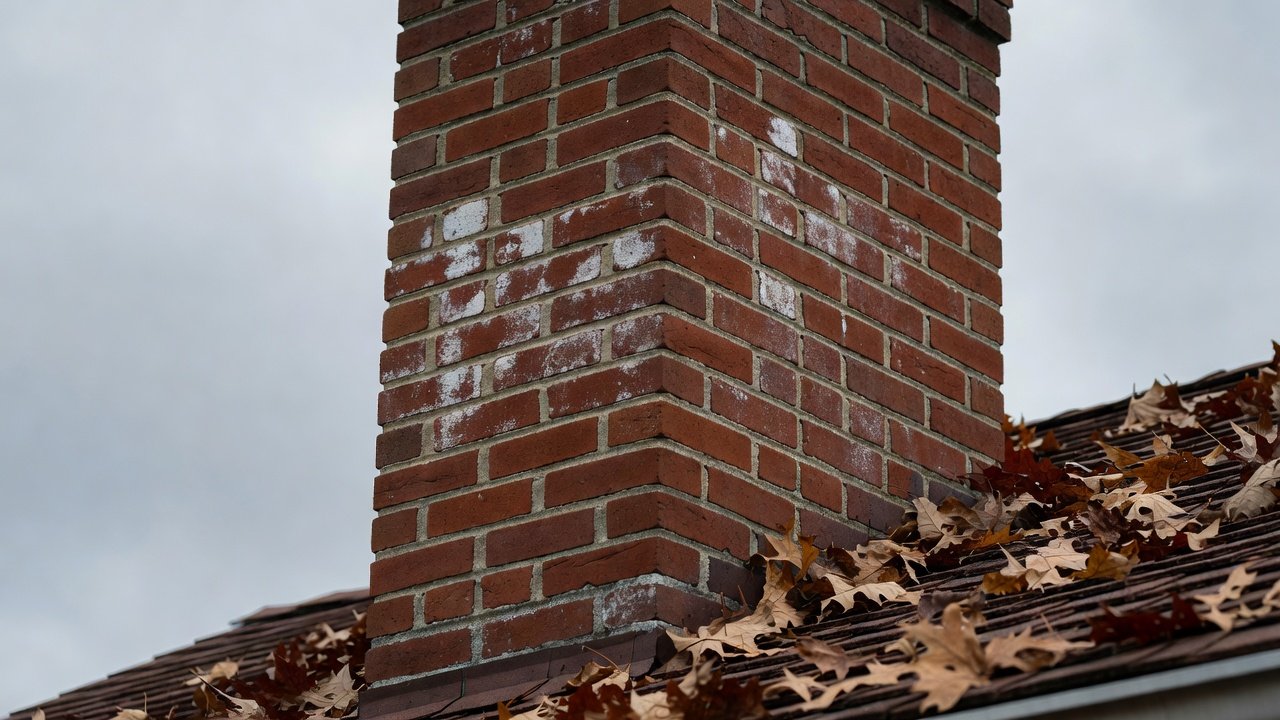
3. White Staining (Efflorescence) on the Exterior Masonry
Those chalky white streaks running down the outside of your chimney are salt deposits left behind when water moves through the brick and evaporates. It looks cosmetic. It isn’t. Efflorescence is a symptom of chronic water intrusion meaning the brick is absorbing and releasing moisture through repeated freeze-thaw cycles. In a New Jersey winter, that process will open cracks, spall brick faces, and eventually compromise mortar joints. We see this constantly on older homes in Harrington Park and Demarest, where chimneys were built without adequate flashing or with crowns that have never been sealed.
Keep an eye on it but schedule an inspection soon. If the staining appeared recently, it may be early stage. If it’s been there for more than one season, you likely already have interior masonry damage that needs repair.
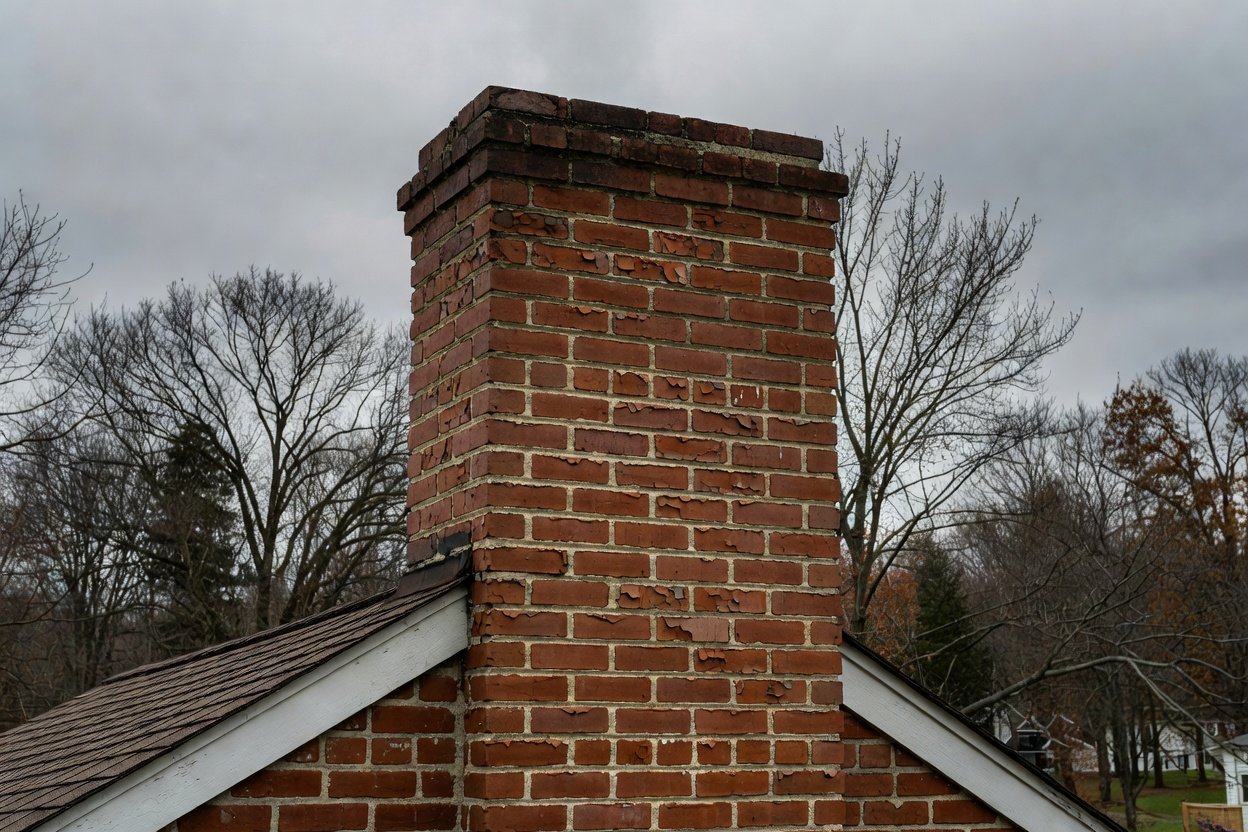
4. Visible Gaps or Crumbling in the Mortar Joints
Stand back and look at your chimney from the yard. If you can see daylight between bricks, if mortar is visibly recessed or crumbling, or if small pieces of brick are showing up on the roof or in the gutters that is active structural deterioration. This does not fix itself, and repointing is not a homeowner project when it’s happening above the roofline. Working at that height with the right tools and materials requires a professional.
Call a pro now. Deteriorating mortar joints allow water into the masonry core and can progress to structural instability within one or two hard winters.
5. A Damper That Sticks, Won’t Seal, or Rattles When Closed
Your damper is supposed to close tightly enough that you feel a difference in draft when it’s shut. If it rattles in the wind, won’t close all the way, or has visible rust and warping when you look up into the firebox, it’s either corroded or the mechanism has failed. A broken damper means cold air, animals, and moisture have a direct path into your home. Some homeowners in Park Ridge and River Vale have told us they just stuff a towel in the firebox opening which is not a solution and can become a fire hazard if they forget it’s there.
Call a pro now. Damper replacement is not complicated, but working inside the flue to fit and seat a top-mount damper properly requires experience and the right components for your flue size.
6. Debris, Nesting Material, or Animal Sounds in the Flue
If you hear scratching or chirping from the chimney, or if you find twigs, leaves, or feathers in the firebox, something has been living in your flue. Chimney swifts and raccoons are the most common culprits in Bergen County. Beyond the obvious issue, nesting material is highly combustible and can block the flue entirely. Do not attempt to smoke out animals or light a fire to clear the blockage.
Call a pro now. We clear blockages and install stainless steel chimney caps that prevent re-entry. Chimney swifts are a federally protected species, which adds a compliance layer that makes this genuinely not a DIY situation.
7. A Rumbling or Popping Sound During a Fire
Normal fires crackle and pop at the log level. A deep rumble or a sound that seems to come from inside the walls or the upper flue is not normal. That sound is often a small chimney fire burning off a creosote deposit. It can extinguish on its own and leave no visible damage which is exactly what makes it dangerous, because the homeowner doesn’t realize it happened and continues using the fireplace. Cracked flue tiles are a common aftermath.
Call a pro now. Stop using the fireplace immediately. A Level 2 inspection with camera scoping is required. The CSIA reports that a Level 2 inspection typically costs between $150 and $500 money that is worth every dollar compared to the alternative.
8. Smoke Spilling Into the Room During Use
Some smoke rollout during startup is common, especially with cold flues. Persistent rollout after the fire is established means the flue is not drafting correctly. This can be caused by a blockage, an undersized flue, a deteriorated flue liner, or negative air pressure in the home and the cause matters, because each one has a different fix. Cracking a window near the fireplace sometimes helps; if it does, that tells us something specific about what’s happening with your home’s air pressure.
Keep an eye on it and document it. If cracking a window stops the rollout entirely, mention that when you call. If it doesn’t help at all, call sooner rather than later.
What Homeowners Can Reasonably Do on Their Own
We want to be honest about this: there is real maintenance a homeowner can and should do between professional visits. Clearing out ash after each burn, keeping the damper handle clean and operable, checking the visible portion of the firebox and smoke shelf with a flashlight, and making sure the chimney cap is in place from the ground all of that is appropriate for a homeowner to handle. Buying and burning a chimney cleaning log once a season is also fine as a supplemental measure, though it is not a substitute for professional cleaning.
What crosses the line: anything involving the flue interior above arm’s reach, anything involving the flue liner, any masonry repair above ground level, cap installation or replacement, and any work following a suspected chimney fire or system malfunction. The liability is real, the risks are real, and the margin for error is narrow.
Frequently Asked Questions
How often should I get a chimney sweep in Harrington Park NJ?
NFPA 211 recommends a professional inspection at least once per year, regardless of how much you use the fireplace. For wood-burning systems that go through a cord or more per season, the CSIA recommends annual cleaning as well. In practice, most homeowners in Harrington Park and the surrounding Northern Valley area should schedule before the heating season begins ideally September or early October before appointment availability tightens up.
What does a chimney sweep cost in Bergen County NJ in 2026?
HomeAdvisor’s 2024-2025 data put the national average chimney sweep at $130 to $380, with the northeastern United States, including New Jersey, trending toward the higher end due to local labor costs. A standard sweep and Level 1 inspection in Bergen County typically falls in the $175 to $299 range depending on flue height and condition. If a Level 2 inspection with camera scoping is required such as at a home sale or after a suspected chimney fire expect $250 to $500.
Can I use my fireplace if I smell smoke when it’s not running?
No. A smoky or sour odor from a cold fireplace is a reliable indicator of significant creosote buildup and possibly a draft or liner issue. Using the fireplace before that is diagnosed and cleared adds real fire risk. Schedule a chimney sweep before your next fire do not rely on a cleaning log or ventilation as a workaround.
Schedule Your Harrington Park Chimney Sweep
If you have noticed a smoky odor, creosote buildup, damaged mortar, smoke rollout, or unusual sounds from your chimney, do not wait until the problem gets worse. A professional inspection and sweep can identify the issue and help determine what your chimney needs before you use the fireplace again.
Northvale Chimney serves Harrington Park, Westwood, Northvale, Old Tappan, Park Ridge, and surrounding Northern Valley communities. Our team provides thorough inspections, chimney sweeping, and repairs with clear recommendations and no unnecessary work.
Call Northvale Chimney or visit chimneynorthvale.com to schedule your 2026 chimney inspection and sweep today.
Related from Northvale Chimney: Trusted Chimney Sweep Old Tappan NJ · Chimney Repair in Northvale, NJ