
Chimney Cleaning Bergen County: Keep Every Fire Safe This Season
Chimney cleaning in Bergen County means the thorough removal of creosote, soot, and debris from the flue liner, firebox, and smoke chamber of a woodburning or gas appliance and it is the single most effective step a homeowner can take to prevent chimney fires and carbon monoxide buildup. Bergen County’s mix of older colonial homes, cold winters, and heavily wooded lots creates conditions where chimneys accumulate dangerous deposits faster than many homeowners expect. At Northvale Chimney, we serve towns across the county from Northvale and Old Tappan to Harrington Park and Closter with the same methodical, safety-first approach every time.
If you burned more than a cord of wood last season, haven’t had your flue swept in over a year, or recently moved into a Bergen County home without service records, a professional cleaning is overdue.
Why Creosote Is a Bigger Problem in Bergen County Than You Might Think
Bergen County homeowners tend to burn a lot of hardwood oak, maple, and cherry from local tree services are common which is good. But even well-seasoned hardwood produces creosote, the tar-like byproduct of incomplete combustion. In our climate, cool autumn nights mean fireplaces get lit early, often before the flue has fully warmed. A cold flue condenses flue gases faster, accelerating creosote accumulation on the liner walls.
There are three stages of creosote: a dusty, brushable deposit (Stage 1); a flaky or tar-like coating (Stage 2); and a hardened, glazed crust that can fuel a chimney fire reaching over 2,000°F (Stage 3). Routine annual cleaning keeps most Bergen County chimneys at Stage 1, where removal is straightforward. Skipping a season or two often means dealing with Stage 2 and occasionally Stage 3, which requires chemical treatment beyond a standard sweep.
Beyond fire risk, a partially blocked flue can push carbon monoxide back into living spaces. In airtight, well-insulated Bergen County homes particularly those updated in the 2010s and 2020s backdrafting is a real and underappreciated hazard.
What Our Chimney Cleaning Process Actually Looks Like
We do not show up with a brush, scrub for fifteen minutes, and hand you an invoice. Here is the actual sequence we follow on every cleaning appointment:
- Pre-cleaning visual inspection. Before any brush touches the flue, we look at the firebox, damper, smoke shelf, and accessible flue sections. If we see a cracked liner tile or a deteriorated mortar joint, we flag it before disturbing debris that could obscure it further.
- Drop cloth and vacuum setup. We place heavy-duty drop cloths across your hearth and surrounding floor and connect a HEPA-filtered commercial vacuum to the firebox opening. This negative-pressure setup keeps soot out of your living room a detail that matters if you have light-colored carpets or upholstered furniture nearby.
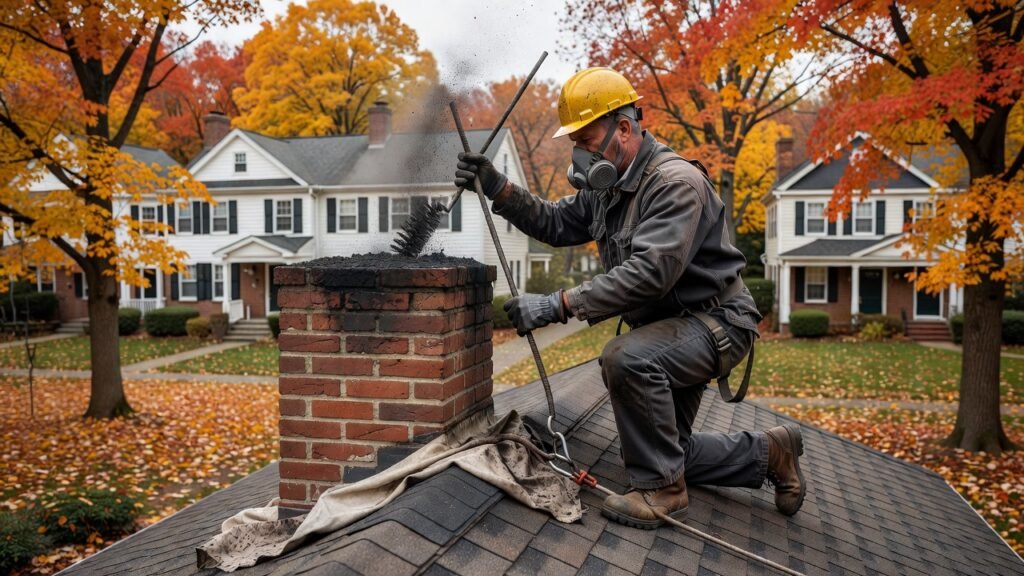
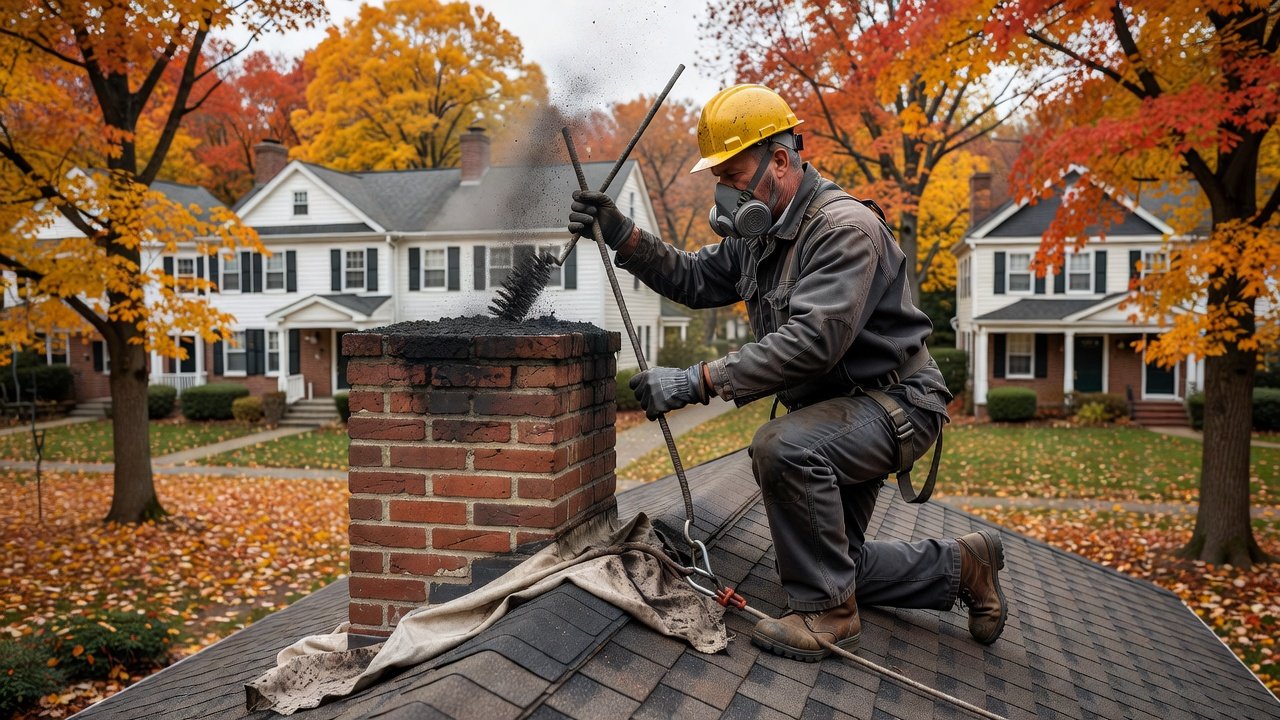
- Top-down brush sweep. Working from the roof, we run chimney brushes sized to your specific flue dimensions (round, square, or rectangular) down the full length of the liner. Multiple passes are made as needed until the liner walls are clean.
- Smoke chamber and shelf cleaning. The smoke chamber the funnel-shaped area above the firebox — collects heavy deposits that a standard sweep misses. We clean this area by hand with brushes and vacuum attachment.
- Firebox cleaning and damper check. We clear debris from the firebox floor, inspect the damper for proper seating and operation, and confirm the ash dump (where present) is functional.
- Post-cleaning walk-through. We show you what we found photos from inside the flue if anything warrants a closer look and explain your chimney’s current condition honestly, without upselling services you do not need.
What Is Included in a Standard Cleaning Appointment
- Full flue sweep from crown to firebox (or appliance connection for inserts)
- Smoke chamber and smoke shelf cleaning
- Firebox interior cleaning
- Damper inspection and operation test
- Visual inspection of the firebox, liner, and accessible exterior crown
- HEPA vacuum containment throughout
- Written summary of findings and any recommended next steps
A Level 1 inspection the National Fire Protection Association’s baseline inspection standard is performed as part of every cleaning visit at no additional charge. If a more thorough examination is warranted (for example, after a chimney fire event or prior to purchasing a home), we can schedule a Level 2 inspection with camera equipment separately.
A Bergen County Company That Knows Bergen County Chimneys
Northvale sits in the northeastern corner of Bergen County, and we have been cleaning and repairing chimneys throughout the area long enough to recognize the patterns that come with the local housing stock. The pre-war colonials in River Vale often have original clay tile liners that need gentler brush pressure. The split-levels built throughout Woodcliff Lake and Park Ridge in the 1960s frequently have oversized flues that were designed for open fireplaces but now vent gas inserts a mismatch that creates draft problems we know how to diagnose. Newer construction in Hillsdale and Emerson sometimes includes prefabricated fireplaces with metal flue systems that require different brushes and techniques entirely.
We are also familiar with Bergen County’s burn-season rhythm. Fall appointments fill up quickly typically by mid-October so scheduling in late summer or early September is consistently the easiest way to get a date that works for your schedule before the first cold snap arrives.
Frequently Asked Questions About Chimney Cleaning in Bergen County
How often does a Bergen County fireplace actually need to be cleaned?
The NFPA recommends annual cleaning and inspection for any chimney in regular use. In Bergen County, where wood-burning season runs roughly October through March and many homeowners burn two to four fires per week, once a year is the realistic minimum. If you are burning more than two cords of wood annually, twice-yearly cleaning is worth discussing. Gas fireplace flues accumulate less solid debris but still need annual inspection for blockages, liner integrity, and proper draft.
My Bergen County home has a gas fireplace insert does it still need chimney cleaning?
Yes. Gas appliances produce less creosote than wood, but the flue liner can still accumulate moisture deposits, condensation byproducts, and animal nesting material and the liner connection between the insert and the existing masonry chimney is a common point of deterioration. An annual inspection and light cleaning keeps the appliance venting safely and catches liner issues before they become expensive repairs.
What happens if I skip chimney cleaning for two or three seasons in a row?
Creosote typically advances from Stage 1 to Stage 2 after one or two skipped seasons of regular burning. Stage 2 deposits require more aggressive brushing and sometimes chemical loosening agents, which adds time and cost. Beyond creosote, bird and squirrel nesting (common in Bergen County, particularly with clay-tile chimneys lacking a proper cap) can partially or fully obstruct the flue within a single off-season. The longer the gap, the higher the probability that a cleaning visit uncovers a repair need alongside the standard cleaning work.
Ready to Schedule Your Chimney Cleaning in Bergen County?
Fall appointments go fast, and a clean chimney is one of the simplest ways to make your home safer before you light the first fire of the season. Call Northvale Chimney directly or use our online booking form to choose a date. We serve Northvale and communities throughout Bergen County no long waits, no surprise charges, and a straight answer about what your chimney actually needs.
Call us to book your chimney cleaning appointment today. Same-week availability is often possible in spring and summer. Don’t wait until October to find out we’re booked up.
Related from Northvale Chimney: Chimney Repair in Northvale, NJ · Trusted Chimney Sweep Harrington Park NJ · Chimney Sweep Service in Northvale, NJ